

Merrillville, IN
Munster, IN

Follow Us
Like Us

Blog

The Most Likely Cause of Your Heel Pain

The plantar fascia is a strong, weight bearing band of connective tissue that starts at the heel bone on the bottom of the foot. From there it moves up the foot to help form and support the arch, and then fans out to connect with each of the toes. Because the plantar fascia bears a person’s weight during walking, running and jumping, it can become damaged or even develop microtears from excessive pressure or overuse. This condition is known as plantar fasciitis, which causes inflammation and heel pain. This pain is particularly acute in the morning after the plantar fascia has been in a flexed position and contracts overnight as you sleep. As you begin to move and stretch the plantar fascia, the pain will lessen temporarily, only to return later in the day. A podiatrist should be consulted if you believe you have plantar fasciitis. Since this is the most common form of heel pain, there are a variety of non-invasive and effective treatments your podiatrist can use to provide the relief you are seeking.

Plantar fasciitis is a common foot condition that is often caused by a strain injury. If you are experiencing heel pain or symptoms of plantar fasciitis, contact Ahmad Elsamad, DPM from The Institute of Foot & Ankle Reconstructive Surgery . Our doctor can provide the care you need to keep you pain-free and on your feet.

What Is Plantar Fasciitis?

Plantar fasciitis is one of the most common causes of heel pain. The plantar fascia is a ligament that connects your heel to the front of your foot. When this ligament becomes inflamed, plantar fasciitis is the result. If you have plantar fasciitis you will have a stabbing pain that usually occurs with your first steps in the morning. As the day progresses and you walk around more, this pain will start to disappear, but it will return after long periods of standing or sitting.

What Causes Plantar Fasciitis?

  • Excessive running
  • Having high arches in your feet
  • Other foot issues such as flat feet
  • Pregnancy (due to the sudden weight gain)
  • Being on your feet very often

There are some risk factors that may make you more likely to develop plantar fasciitis compared to others. The condition most commonly affects adults between the ages of 40 and 60. It also tends to affect people who are obese because the extra pounds result in extra stress being placed on the plantar fascia.

Prevention

  • Take good care of your feet – Wear shoes that have good arch support and heel cushioning.
  • Maintain a healthy weight
  • If you are a runner, alternate running with other sports that won’t cause heel pain

There are a variety of treatment options available for plantar fasciitis along with the pain that accompanies it. Additionally, physical therapy is a very important component in the treatment process. It is important that you meet with your podiatrist to determine which treatment option is best for you.

If you have any questions, please feel free to contact our offices located in Merrillville, and Munster, IN . We offer the newest diagnostic and treatment technologies for all your foot care needs.

 

Read more about Plantar Fasciitis

What to Know About Broken Toes 

If you have broken your toe, you may not realize it, since sprained and strained toes can sometimes produce similar symptoms. If your toe is broken, it may bleed, and a bruise may form on the skin or under the toenail. Swelling will typically be present, and in severe cases, your toe may become misshapen, if the bone has become displaced or the toe joint has also been broken. If the big toe joint has fractured, you will most likely have difficulty walking. You can break toes by stubbing them severely, dropping a heavy object on them, or they may become broken as part of a bigger injury. Broken toes can take several weeks to heal if they are cared for appropriately. If you believe you may have broken your toe, it's wise to consult with a podiatrist. This is particularly important for people with diabetes, peripheral arterial disease, and heart failure, all of which can make it more difficult for broken toes to heal.

A broken toe can be very painful and lead to complications if not properly fixed. If you have any concerns about your feet, contact Ahmad Elsamad, DPM from The Institute of Foot & Ankle Reconstructive Surgery . Our doctor will treat your foot and ankle needs.

What to Know About a Broken Toe

Although most people try to avoid foot trauma such as banging, stubbing, or dropping heavy objects on their feet, the unfortunate fact is that it is a common occurrence. Given the fact that toes are positioned in front of the feet, they typically sustain the brunt of such trauma. When trauma occurs to a toe, the result can be a painful break (fracture).

Symptoms of a Broken Toe

  • Throbbing pain
  • Swelling
  • Bruising on the skin and toenail
  • The inability to move the toe
  • Toe appears crooked or disfigured
  • Tingling or numbness in the toe

Generally, it is best to stay off of the injured toe with the affected foot elevated.

Severe toe fractures may be treated with a splint, cast, and in some cases, minor surgery. Due to its position and the pressure it endures with daily activity, future complications can occur if the big toe is not properly treated.

If you have any questions, please feel free to contact our offices located in Merrillville, and Munster, IN . We offer the newest diagnostic and treatment technologies for all your foot care needs.

Read more about What to Know About a Broken Toe

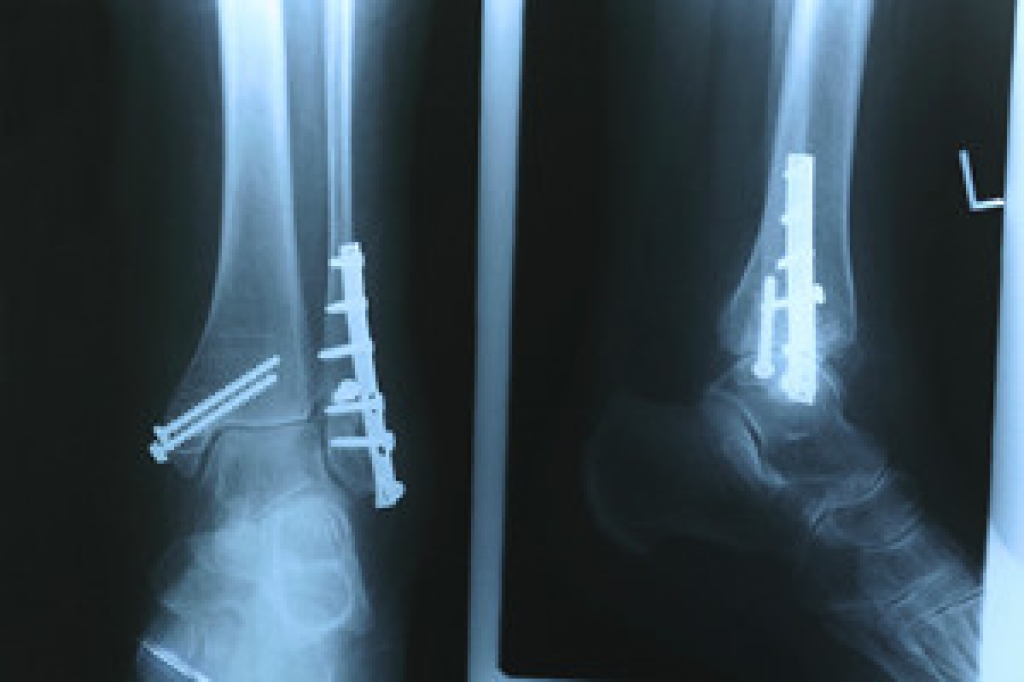
ORIF for an Ankle Fracture

Open reduction and internal fixation (ORIF) is a type of surgical operation that can be used to repair a broken ankle. This procedure is usually recommended when the fracture is large, the bones are displaced or broken into many pieces, or when the fracture involves damage to the surrounding nerves or blood vessels. During an ORIF procedure, the surgeon may use wires, screws, plates, or pins to realign the broken bones so that they can heal properly. After surgery, you will need to wear a cast or splint to immobilize the ankle and promote a full recovery. If you have fractured your ankle, it is strongly suggested that you seek the care of a podiatrist.

Broken ankles need immediate treatment. If you are seeking treatment, contact Ahmad Elsamad, DPM from The Institute of Foot & Ankle Reconstructive Surgery . Our doctor can provide the care you need to keep you pain-free and on your feet. 

Broken Ankles
A broken ankle is experienced when a person fractures their tibia or fibula in the lower leg and ankle area. Both of these bones are attached at the bottom of the leg and combine to form what we know to be our ankle.

When a physician is referring to a break of the ankle, he or she is usually referring to a break in the area where the tibia and fibula are joined to create our ankle joint. Ankles are more prone to fractures because the ankle is an area that suffers a lot of pressure and stress. There are some obvious signs when a person experiences a fractured ankle, and the following symptoms may be present.

Symptoms of a Fractured Ankle

  • Excessive pain when the area is touched or when any pressure is placed on the ankle
  • Swelling around the area
  • Bruising of the area
  • Area appears to be deformed

If you suspect an ankle fracture, it is recommended to seek treatment as soon as possible. The sooner you have your podiatrist diagnose the fracture, the quicker you’ll be on the way towards recovery.

If you have any questions, please feel free to contact our offices located in Merrillville, and Munster, IN . We offer the newest diagnostic and treatment technologies for all your foot care needs.

Read more about All About Broken Ankles

Heel Pain Can Be Treated!

Do you suffer from heel pain when you get up in the morning? If so, you should seek professional help and have a proper diagnosis performed. Heel pain can be caused by several different foot-related conditions.

What Happens if You Don’t Treat an Ankle Sprain?

Ankle sprains are one of the most common foot and ankle injuries that podiatrists treat. They occur when one or more ligaments in the ankle are overstretched or torn. If you have sprained your ankle, it is suggested that you seek treatment, particularly if the sprain is moderate or severe. Leaving an ankle sprain untreated can have potentially lifelong consequences. An untreated ankle sprain can lead to weakness in the ankle joint, causing chronic pain and ankle instability that makes repeated injuries more likely. Soft tissues in your ankle could also become trapped between the injured ligament and a bone, resulting in further pain, weakness, and difficulty walking. Swelling caused by an ankle sprain may damage surrounding nerves, muscles, and blood vessels if left untreated. If you have sprained your ankle, please seek the care of a podiatrist.

Although ankle sprains are common, they aren’t always minor injuries. If you need your ankle injury looked at, contact Ahmad Elsamad, DPM from The Institute of Foot & Ankle Reconstructive Surgery . Our doctor can provide the care you need to keep you pain-free and on your feet.

How Does an Ankle Sprain Occur?

Ankle sprains are the result of a tear in the ligaments within the ankle. These injuries may happen when you make a rapid shifting movement while your foot is planted. A less common way to sprain your ankle is when your ankle rolls inward while your foot turns outward.

What Are the Symptoms?

  • Pain at the sight of the tear
  • Bruising/Swelling
  • Ankle area is tender to touch
  • In severe cases, may hear/feel something tear
  • Skin discoloration

Preventing a Sprain

  • Wearing appropriate shoes for the occasion
  • Stretching before exercises and sports
  • Knowing your limits

Treatment of a Sprain

In many cases, the RICE method (Rest, Ice, Compression, and Elevate) is used to treat ankle sprains. However, you should see a podiatrist to see which treatment option would work best with your injury. In severe cases, surgery may be required.

It is important to ask your doctor about rehab options after you receive treatment for your injury. Stretching, strength training, and balance exercises may help the ankle heal while also preventing further injury.

If you have any questions, please feel free to contact our offices located in Merrillville, and Munster, IN . We offer the newest diagnostic and treatment technologies for all your foot care needs.

Read more about Ankle Sprains
Connect with us

our recent articles